Spiritual Safety: Why Ignoring Religion in Therapy Can Be Dangerous
In the mental health field, we talk constantly about "cultural competency." We are trained to respect a client's race, gender, and socioeconomic status. But there is one aspect of diversity that often gets left out of the conversation: Spirituality.
As I reflect on recent readings regarding spiritual competency, I am convinced that ignoring a client's faith isn't just an oversight, it can be actively detrimental to their healing.
The Cost of Disconnection
When a therapist fails to demonstrate empathy and respect for a client's spiritual background, they are essentially shutting the door on a massive part of that client's identity.
This creates a rupture in trust. As Vieten and Scammell (2015) point out, many people avoid therapy specifically because they fear their religious beliefs will be scrutinized, weakened, or pathologized. If we don't explicitly welcome their spirituality into the room, we reinforce the false belief that God and psychology don't mix.
The Risk of Misdiagnosis
Even more concerning is the risk of misdiagnosis. If a therapist views the world through a strictly secular lens, they might misinterpret spiritual experiences as mental illness.
A client engaging in deep prayer or hearing from the divine might be misdiagnosed with a psychotic disorder.
A client using substances as part of a sacred ritual might be mislabeled with a substance use disorder.
When we view spirituality as a vital aspect of human diversity, just as important as race or ethnicity, we stop pathologizing these experiences and start understanding them in context.
Lessons from American Indian Traditions
This week, I also dove deep into the diversity of American Indian Religions. Having lived on a reservation, I have seen firsthand the beauty of these traditions, but the readings reminded me of the immense diversity between tribes.
There is no single "Native American" spirituality. Humility is key. We must always explore the client’s individual beliefs rather than making assumptions based on a textbook.
However, one universal concept that I find incredibly helpful in clinical practice is the Medicine Wheel.
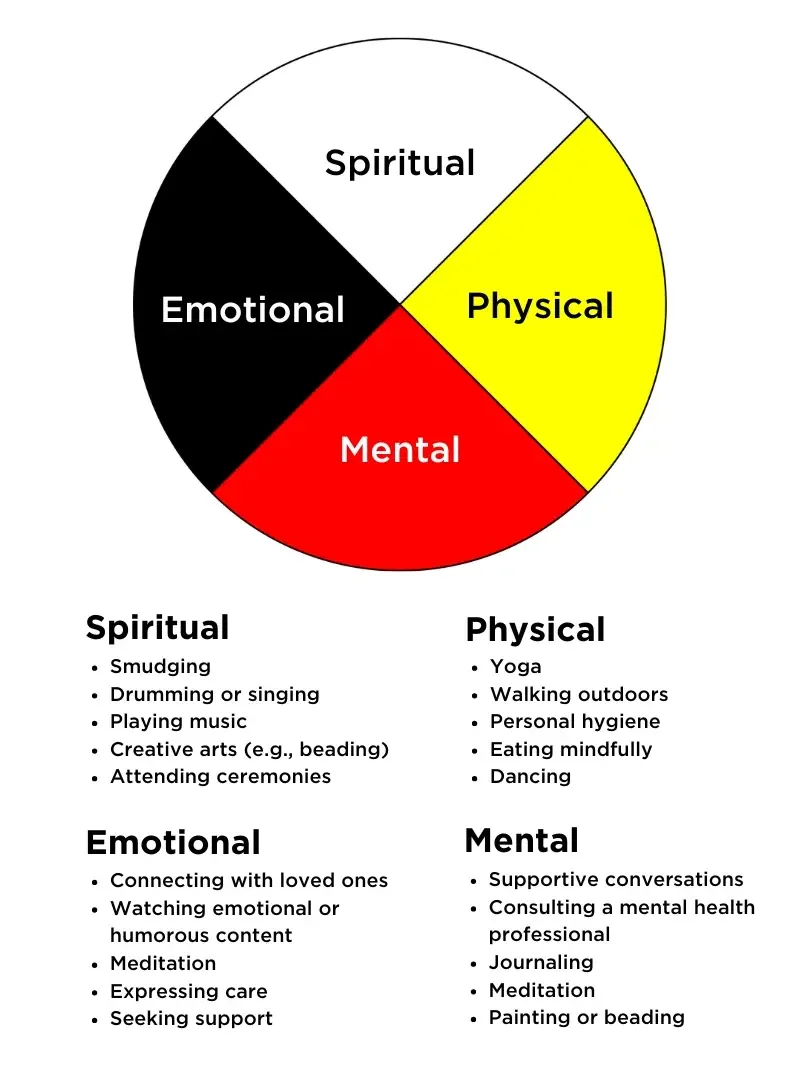
The Medicine Wheel reinforces the idea of circular thinking, the understanding that life isn't a straight line, but a cycle of balance. It teaches us that health requires harmony between the physical, emotional, mental, and spiritual. As a clinician, I love using this framework to help clients identify which area of their "wheel" is out of balance, moving away from symptom management and toward total, holistic wellness.
References
Vieten, C. & Scammell, S. (2015). Spiritual & religious competencies in clinical practice: Guidelines for psychotherapists & mental health professionals. New Harbinger Publications.
