We often tell young people that education is the key to a better future.
Work hard. Stay focused. Make good decisions. Believe in yourself.
These messages are intended to encourage students to take responsibility for their futures. But they also reflect an assumption that deserves closer examination: that academic success is primarily determined by individual effort.
What happens when two students are equally motivated, equally capable, and equally determined, but their circumstances are fundamentally different?
Can we reasonably expect the same outcomes when one student has stable housing, reliable transportation, and supportive caregivers, while another is navigating poverty, family instability, trauma, or responsibilities beyond their developmental years?
In 2018, while pursuing my Master of Social Work at the University of Southern California, I read And Still We Rise by Miles Corwin, which follows students in a gifted program at Crenshaw High School in Los Angeles.
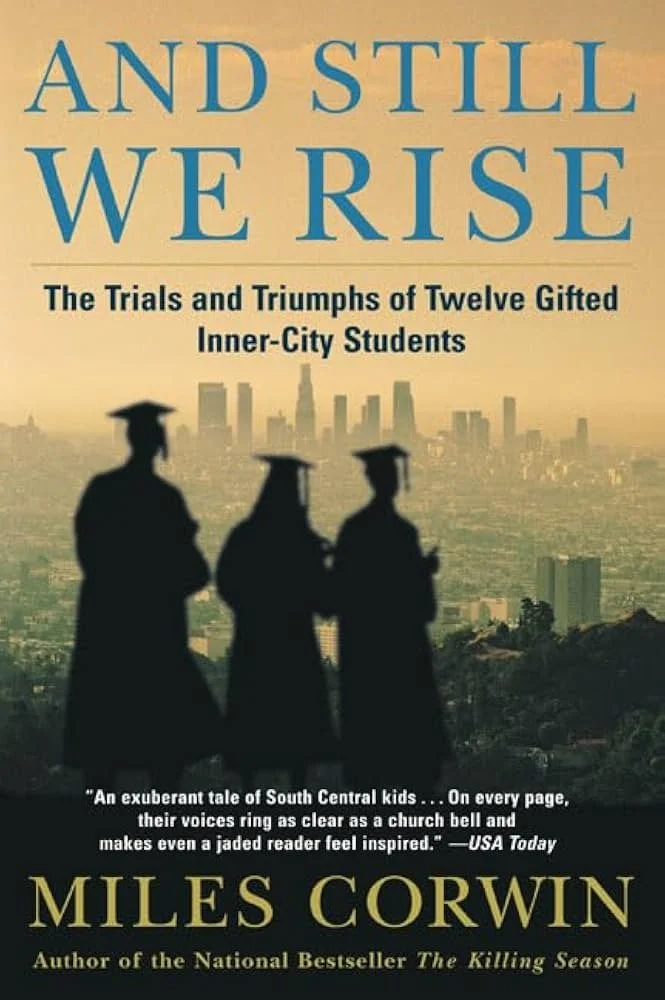
The book challenged me to think more critically about the relationship between individual potential and the environments in which that potential is expected to develop.
It also reinforced a question that remains important to me as a school social worker:
Are we creating educational environments that recognize students' abilities, or are we measuring their abilities by how successfully they overcome barriers we have failed to address?
When Intelligence Is Not Enough
One of the most powerful aspects of And Still We Rise is its portrayal of academically gifted students navigating circumstances that extend far beyond the classroom.
The students demonstrate intellectual curiosity, ambition, and academic ability.
Yet their educational experiences are influenced by poverty, racial inequality, family responsibilities, and community challenges.
This creates an important distinction between having potential and having the opportunity to realize it.
We often treat academic achievement as evidence of intelligence, discipline, or motivation.
But achievement also reflects access to resources.
A student may be academically capable yet struggle to complete assignments because their home environment is unstable.
Another may have ambitious educational goals but lack the financial support necessary to pursue them.
These challenges do not diminish a student's intellectual ability.
They reveal the limitations of evaluating academic success without considering the circumstances surrounding it.
Potential is an individual capacity. Opportunity is also shaped by the environments and systems in which that capacity develops.
The Difference Between Equality and Equity
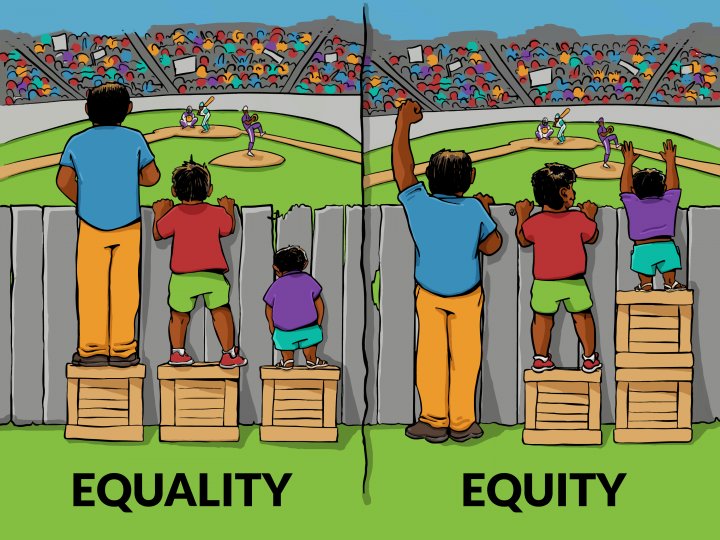
In my original response paper, I explored the relationship between racial inequality and access to higher education, including debates surrounding California's Proposition 209.
The broader issue was whether policies that appear neutral necessarily produce equitable opportunities.
Equality is often understood as providing individuals with the same opportunities or resources.
Equity recognizes that individuals may begin from different circumstances and encounter different barriers.
Consider two students preparing to apply to college.
One has access to private tutoring, extracurricular activities, professional networks, and family members familiar with the admissions process.
The other may be equally talented but attend an under-resourced school, work after class to support their family, or lack access to the same opportunities.
Both students may face the same admissions requirements.
But have they experienced the same opportunity to prepare?
This does not mean academic standards are unimportant.
Rather, it raises questions about whether the pathways used to demonstrate achievement are equally accessible.
Treating everyone according to the same rules does not necessarily eliminate the inequalities that existed before those rules were applied.
When Trauma Is Misunderstood as Behavior
Another theme in the book involves the ways traumatic experiences can influence students' relationships, emotional responses, and behavior.
In my original paper, I reflected on Olivia, a young person who had experienced abuse and family separation.
Her experiences raised questions about attachment, trust, and how children respond when caregiving relationships have been unsafe or inconsistent.
A student who has experienced repeated abandonment may struggle to trust adults.
A young person who has learned to respond to conflict through avoidance may withdraw or leave situations that feel emotionally threatening.
These responses may be interpreted as defiance, disengagement, or a lack of motivation.
But behavior does not exist independently of experience.
This is one reason trauma-informed approaches encourage educators and mental health professionals to consider what may be influencing a student's response.
Understanding the context of behavior does not eliminate the need for boundaries or accountability.
It allows us to respond more thoughtfully.
Sometimes, what appears to be resistance may reflect a young person's attempt to protect themselves in circumstances they perceive as unsafe.
When Life Responsibilities Interrupt Education
One story that stood out to me involved Toya, an academically gifted student whose educational plans were disrupted by the financial responsibilities of teenage parenthood.
Despite her academic abilities, she faced difficulties continuing in her program because she could not afford childcare.
Her experience illustrated something important.
We frequently encourage students to remain in school while overlooking the practical circumstances that determine whether continued attendance is possible.
A student may value education and still be unable to participate consistently because of caregiving responsibilities, transportation limitations, housing insecurity, or financial hardship.
When we interpret these situations exclusively as personal choices, we risk overlooking the structural conditions influencing those choices.
Toya's experience led me to consider the importance of school-community partnerships that connect students with childcare assistance and other supportive resources.
More broadly, it raised a question about what educational access should mean.
If we want students to complete their education, should our responsibility end at providing a classroom, or should we also consider the barriers preventing them from entering it?
The Role of School Social Workers
In my 2018 paper, I explored several ways school social workers could support students experiencing these challenges.
These included individual counseling, group interventions, family engagement, conflict mediation, and connections to community resources.
But the larger responsibility of school social work extends beyond providing emotional support.
School social workers operate at the intersection of student development, family systems, educational institutions, and broader social conditions.
Our work requires recognizing how those systems influence a student's ability to participate meaningfully in school.
For example, counseling may help a student develop strategies to manage anxiety.
However, if that anxiety is intensified by housing instability, the student may also need practical assistance and coordinated support.
Similarly, helping a student improve attendance may require understanding transportation difficulties, caregiving responsibilities, family relationships, or experiences of exclusion within the school environment.
This reflects the person-in-environment perspective, a foundational approach in social work that emphasizes understanding individuals within their social contexts.
Students are not simply learners who enter classrooms each morning.
They are people whose experiences, relationships, responsibilities, and environments accompany them into school.
Is Resilience Enough?
One of the most compelling aspects of stories about students overcoming adversity is their demonstration of resilience.
We admire young people who persist despite difficult circumstances.
And understandably so.
But I think our admiration for resilience should also invite a more uncomfortable question.
Have we become so accustomed to celebrating students who overcome extraordinary barriers that we sometimes forget to question why those barriers exist?
Resilience is meaningful.
It reflects the ability to adapt and continue functioning in the face of adversity.
However, resilience should not become an expectation that allows institutions to overlook systemic inequality.
A student should not have to demonstrate extraordinary perseverance simply to access the same educational opportunities available to others.
Recognizing students' strengths is important.
So is asking whether our schools and communities are doing enough to reduce the burdens students are expected to carry.
Final Reflections: Rethinking What Student Success Really Means
Looking back on my response to And Still We Rise, I appreciate how the book challenged conventional assumptions about academic achievement.
The students' experiences demonstrated that intelligence, ambition, and determination do not exist separately from social conditions.
Their stories also reinforced the importance of approaching students with curiosity rather than judgment.
As a school social worker, I believe supporting educational success requires more than encouraging students to work harder or make better decisions.
It requires recognizing the environments that influence their opportunities and addressing barriers that cannot be resolved through individual effort alone.
We should continue encouraging young people to develop confidence, responsibility, and perseverance.
But we should also remain willing to question the systems that determine which students have access to the resources necessary to thrive.
Perhaps the true measure of an equitable education system is not simply whether students are given the opportunity to succeed, but whether their circumstances allow them to meaningfully pursue that opportunity.
Because educational potential should never be confused with the privilege of having the resources to demonstrate it.
